

FoodTech in Latin America: The Innovations Transforming the Food Industry
1 June, 2026
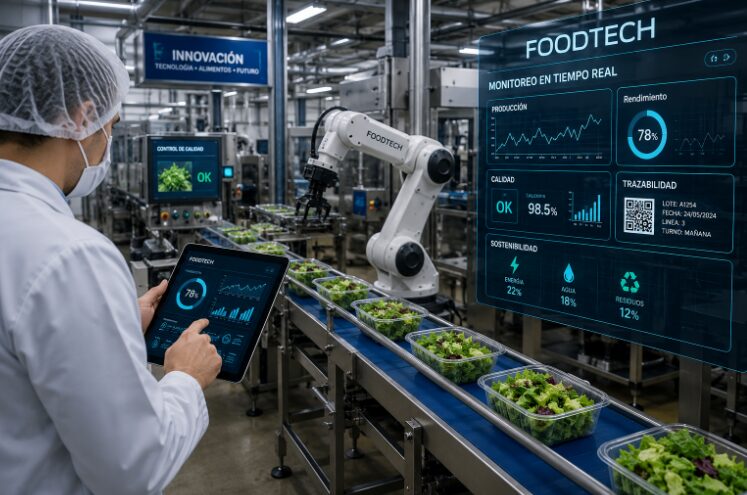
The growth of the FoodTech sector in Latin America is redefining the way food is produced, distributed, and consumed. The combination of technology, innovation, and evolving consumer habits is driving an increasingly dynamic ecosystem, where startups, food companies, and investors are developing more efficient and sustainable solutions.
This transformation goes far beyond new digital applications. FoodTech is reshaping every stage of the food industry’s value chain—from production and logistics to product development and the consumer experience. In a region with strong agro-industrial capabilities, these innovations are becoming increasingly strategic.
What Is FoodTech and Why Is It Growing in Latin America?
The term FoodTech refers to the integration of technology into the food industry. It encompasses solutions related to automation, artificial intelligence, traceability, biotechnology, food delivery, alternative proteins, and production process optimization.
In Latin America, this growth is driven by several factors. On one hand, the region has a strong agro-industrial foundation and significant food production capacity. On the other, there is an increasing need to improve efficiency, reduce waste, and meet the expectations of increasingly demanding consumers.
At the same time, younger generations are seeking healthier, more sustainable, and more personalized products. This is encouraging companies to innovate not only in the products they offer but also in the way they produce and distribute food.
In this context, FoodTech has evolved from an emerging trend into a structural transformation within the food industry.

The Key Innovations Transforming the Industry
One of the most significant changes driven by FoodTech is the digitalization of production and logistics processes. Many companies are already incorporating artificial intelligence, automation, and data analytics to optimize operations and improve decision-making.
Traceability is another major focus. Thanks to new technologies, companies can now monitor products in real time and ensure higher standards of quality and food safety. This is particularly important in international markets, where certifications and compliance requirements continue to become more rigorous.
The development of alternative proteins and functional foods is also gaining momentum. Growing demand for plant-based products, natural ingredients, and value-added foods is creating new opportunities for both startups and established companies.
At the same time, digital platforms and more agile commercial models are expanding rapidly. From logistics solutions to predictive analytics tools, FoodTech is transforming the way the food industry operates.
How FoodTech Is Impacting Food Companies
The adoption of technology enables companies to improve productivity, reduce costs, and respond more quickly to changing market conditions. This is especially relevant in an environment where efficiency and sustainability are becoming increasingly important competitive factors.
In many cases, FoodTech solutions help optimize the use of raw materials, minimize waste, and improve logistics processes. They also allow companies to analyze consumer data and anticipate market trends, enabling more strategic decision-making.
For food companies, this represents a tangible opportunity for growth. Integrating innovation not only enhances competitiveness but also opens the door to new markets and business models.
At the same time, the rise of FoodTech is fostering collaboration among startups, established companies, and investors. This ecosystem is playing an increasingly important role at trade fairs, business matchmaking sessions, and specialized industry events. Events such as ARGENTINA ALIMENTA reflect how technological innovation is becoming a central topic in the food industry’s strategic conversations.
The Challenges Facing the FoodTech Ecosystem in the Region
Although FoodTech is expanding rapidly across Latin America, significant challenges remain before the ecosystem can reach its full potential.
One of the main obstacles is access to funding. Many startups struggle to scale their solutions or expand across the region. Challenges related to infrastructure, connectivity, and technology adoption among more traditional companies also persist.
Regulation is another key issue. Some innovations—particularly those involving biotechnology or novel ingredients—require updated regulatory frameworks capable of supporting the industry’s continued development.
Despite these challenges, the trend continues to gain momentum. The need to produce food more efficiently, sustainably, and adaptably will continue to drive the technological transformation of the food industry in the years ahead.
FoodTech in Latin America is driving a profound transformation across the food industry. The integration of technology, innovation, and new business models is reshaping the way companies produce, distribute, and develop food products.
In an environment where efficiency, sustainability, and adaptability are becoming increasingly critical, companies that successfully embrace these technologies will be better positioned for growth and long-term success within the food sector.
Frequently Asked Questions About FoodTech
What is FoodTech?
FoodTech is the application of technology and innovation within the food industry to optimize production, logistics, commercialization, and product development.
Why is FoodTech growing in Latin America?
Because of the need to improve efficiency, reduce waste, and respond to evolving consumer expectations and sustainability demands.
What technologies are used in FoodTech?
Artificial intelligence, automation, traceability, data analytics, biotechnology, and digital platforms, among many others.
How does FoodTech impact food companies?
It enables companies to optimize processes, reduce costs, improve productivity, and develop new business models within the industry.